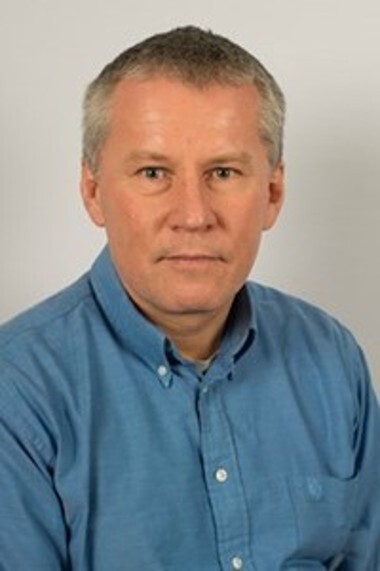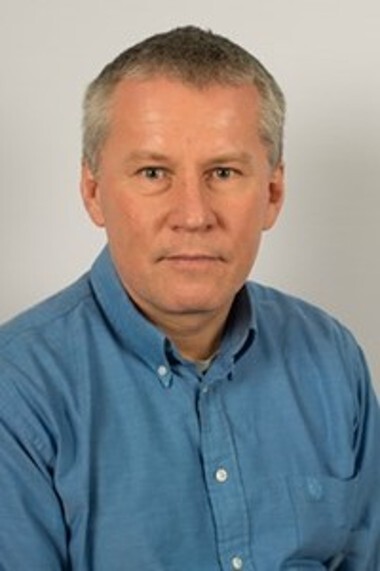
I was the supervisor for Erling Johan Solberg on his PhD project, funded by the Research Council of Norway, on selection and evolution in house sparrows. This work involved translocating individual sparrows between islands on the coast and inland habitats in central Norway. However, it soon became evident that cervid ecology and management were much closer to the main scientific interest of Erling Johan. So, by the time of his graduation in 1998, the title of Erling Johan’s PhD thesis had become “Variation in population dynamics and life history in a Norwegian moose (Alces alces) population: Consequences of harvesting in a variable environment”.
It should not be forgotten that, in spite of this change of scientific focus, Erling Johan still provided important contributions to the establishment of the large project on the metapopulation dynamics of house sparrows at the coast of Norway, which has been operated continuously since 1993. In fact, Erling Johan has co-authored 11 papers on the population ecology of house sparrows, several in leading international journals.
Erling Johan has produced a large scientific output with 129 publications published in internationally reviewed scientific journals. These papers have received much attention, even beyond the community of wildlife researchers, with more than 5,904 citations in journals (as of Web of Science, March 28 2025). Several of his papers were published in journals with wide readership, such as Science (3), Nature Communications, Nature Ecology & Evolution and American Naturalist. In addition, he has published his moose research in leading ecological and evolutionary journals such as Journal of Animal Ecology (7), Ecology (3) and Evolution (1). This illustrates that Erling Johan has been successful through his research on moose, providing contributions that have important impacts on the whole field of research in population ecology. In addition, many of his results have wide applied relevance.
Erling Johan’s moose research can be divided into three major topics. First, he has published several widely cited papers in journals such as Journal of Animal Ecology, Ecography, and Science on patterns in the dynamics of Norwegian moose populations. An important finding in these studies is the large contribution of stochastic variation in key environmental drivers, and the impact of fluctuations in age-distribution on variation in population size. A general feature of his contributions in this field is the frequent use of cutting-edge statistical methods, often based on carefully designed population models.
The second major topic of Erling Johan’s moose research has been his focus on how phenotypic characteristics affect variation in life history traits and the demographic consequences of this variation. Two approaches have been used in these studies. On the Island of Vega in Northern Norway, Erling Johan was a principal investigator enabling radio-collaring of almost all the moose on the island. This enabled the use of modern techniques of molecular genetics to understand why some individual moose of both sexes were more successful in contributing to future generations than others. The validity of some of these patterns related to the effects of sex- and age-ratio variation could even be experimentally examined in this unique study system. The other approach used by Erling Johan in his studies of life history variation has been analyses of long-term databases that included temporal variation in age-specific characteristics of moose shot by hunters in different parts of Norway. These studies have revealed large spatio-temporal differences in key life history traits, which in turn generated geographic variation in demography, often operating through an effect on variation in body mass of younger age-groups.
The third major topic in Erling Johan’s research has related to analyses of different aspects of movement patterns of individual moose in a heterogeneous landscape. Based on data from a large number of radio-collared moose in Fennoscandia. he has been involved in describing novel patterns in how individuals utilize resources distributed in space. Again, some of these studies have attracted huge attention from a wide audience (e.g., the paper by Tucker et al 2018 in Science, classified as a “Highly Cited Paper” by Web of Science with more than 800 citations). Such studies on individual movement patterns are rare in vertebrates living under natural conditions because this requires data on individuals that can be followed over large distances. The extensive database on radio-collared moose in Scandinavia analysed by Erling Johan and collaborators has provided important new insights of relevance for population ecology in general, and for the development of management strategies of harvested species that use large geographical areas.
The research conducted by Erling Johan has also, without doubt, contributed to the monitoring programme for cervids in Norway, which has been funded continuously by the Norwegian Environment Agency since its inception in 1991. This programme includes data on harvested moose, as well as indirect data on the structure and the size of the populations in 7 Norwegian regions. The extensive contribution by Erling Joan in analysing and communicating the results from this programme has been an important reason for the successful evidence-based management of large cervids in most parts of Norway.
Erling Johan is not only a well-known scientist and an important advisor to moose managers, but he has also been heavily involved throughout his entire career in popularizing the scientific output from his research to the general public. He is widely known as an eminent lecturer on a wide range of topics related to the biology of the moose. Every year, he gives many lectures all over Norway to audiences interested in wildlife. In combination with regular appearances in national media, this has made Erling Johan widely recognized as “Mr. Moose” in Norway.
Congratulations to Erling Johan for recognition as a Distinguished Moose Biologist, for his contributions to our knowledge about moose biology, and for making moose a model species for our understanding of general population ecological processes.
Trondheim May 18 2026
Bernt-Erik Sæther