Moose (Alces alces; mooz in Anishinaabemowin, the Ojibwe language) are deeply woven into the subsistence lifeways, cultural identity, and ecological knowledge of many Indigenous Nations across North America (Popp et al., 2019). In the western Lake Superior region, including the lands of the Grand Portage Band of Lake Superior Chippewa in Minnesota, moose are not only a culturally significant species but also a vital source of food sovereignty (Moore, Severud, et al., 2024). The maintenance of a healthy moose population is thus central to Indigenous rights, responsibilities, and restoration efforts on these ancestral territories. From an Indigenous stewardship perspective, landscape features that attract wildlife, such as mineral licks, are important ecological resources and vital sources of medicine, health, and spiritual connection for the animals and people that rely on them (Gilmore et al., 2020; Griffiths et al., 2020, 2025; Vukelich, 2023). However, in a shifting ecological context marked by climate change, habitat fragmentation, and the range expansion of white-tailed deer (Odocoileus virginianus; waawaashkeshiwag), these shared spaces may also serve as arenas that disproportionately affect moose and challenge their recovery on Indigenous-managed lands.
Globally, discrete landscape features focus animal activity through the concentration of resources (Box et al., 2008; Davis et al., 2017; Griffiths et al., 2020) and shape behavior by attracting animals to localized areas (Bracis et al., 2018; Doherty et al., 2010; Kroesen et al., 2020; Wolff & Van Horn, 2003). Despite their importance for many species (Ayotte et al., 2008; Doherty et al., 2010), hotspots congregate animals and increase contact rates, potentially increasing the risk of disease exposure and pathogen transmission (Hearst et al., 2023; Hoyt et al., 2021; Plummer et al., 2018; Williams et al., 2002). This is of particular concern for wildlife populations vulnerable to severe declines and extirpation driven by pathogens and parasites, such as moose in northeastern Minnesota, USA.
Mineral licks are hotspots that provide key minerals (e.g., sodium, potassium, magnesium) and carbonates vital for many life processes (Ayotte et al., 2006; Griffiths et al., 2025; Risenhoover & Peterson, 1986; Tracy & McNaughton, 1995; Weeks, 1978). Minerals found at licks relieve nutritional deprivation (Belovsky & Jordan, 1981; Weeks & Kirkpatrick, 1976), aid fetal development (Ayotte et al., 2006), support lactation (French et al., 1956; Mukherjee & Priyadarshinee, 2017), and are necessary for antler growth (Brochez et al., 2020; French et al., 1956). However, concentrated use of these sites may also elevate parasite loads in the surrounding environment, increasing transmission risk to both definitive and aberrant hosts (Severud, Kautz, et al., 2023).
White-tailed deer have increasingly expanded northward into moose range (Weiskopf et al., 2019). Although deer and moose home ranges are spatially segregated at coarse scales (Cobb et al., 2004; Oliveira-Santos et al., 2021), fine-scale overlap at localized hotspots may facilitate the transmission of parasites and diseases between these species (Severud, Kautz, et al., 2023). In particular, the parasite Parelaphostrongylus tenuis (meningeal worm), a parasite often maintained at high rates asymptomatically within white-tailed deer populations (Carstensen et al., 2018; Escobar et al., 2019; Slomke et al., 1995), is typically lethal to moose (Anderson, 1964). Moose are infected when they accidentally consume gastropods that have acquired meningeal worm larvae from the feces of infected white-tailed deer (Anderson, 1964; Cyr et al., 2014). This infection contributed to a 64% decline in the northeastern Minnesota moose population between 2006 and 2020 (DelGiudice, 2020; Garwood et al., 2026; Lenarz et al., 2010; Severud et al., 2022; Wünschmann et al., 2015). Although infected terrestrial gastropods were detected at low levels in Grand Portage (Severud, Petz Giguere, et al., 2023), areas that concentrate use by deer and moose may still facilitate transmission. Geophagia at licks can facilitate the incidental ingestion of infected gastropods at sites with a higher density of deer feces, posing a potential risk to moose, a naïve host (Severud, Kautz, et al., 2023). Due to the limited range overlap of deer and moose in Minnesota (Oliveira-Santos et al., 2021) and low environmental detection of meningeal worm (Garwood et al., 2023), studying the temporal and spatial use of ungulate hotspots may offer insights into where meningeal worm spillover infection risk is heightened.
Predation pressure on ungulates can vary seasonally (Barber-Meyer & Mech, 2016; Metz et al., 2012; Sovie et al., 2023), influenced by prey availability, body condition (Gable et al., 2024; Sovie et al., 2023), and life history events such as parturition (Wolf et al., 2021). Predator presence and other competitive interactions can also significantly influence prey behavior and temporal use of hotspots (Ayotte et al., 2006; Hearst et al., 2023; Sirot et al., 2016; Slabach et al., 2015). For example, following parturition, female white-tailed deer increased diurnal activity as a predator avoidance strategy (Kautz et al., 2022). Under these conditions, mineral licks may function as ecological traps where spatiotemporal overlap between predators and prey is increased (Haynes, 1985; Link et al., 2011; Macas-Pogo et al., 2023; Mata et al., 2020).
Understanding patterns of hotspot use within ecological communities can offer critical insights into the potential risks associated with using mineral licks and provide important information to wildlife managers. From an Indigenous stewardship perspective based in relational accountability (Wilson, 2008) and multispecies kinship, understanding these dynamics is imperative for protecting moose populations and upholding the responsibilities of co-stewardship, i.e., a cooperative and co-equal approach to managing and conserving natural resources between Indigenous and non-Indigenous partners (Moore, Severud, et al., 2024; Popp et al., 2019). Assessing sex-specific use at hotspots, like mineral licks, can point to the differences in nutrient deprivation on a temporal scale as well as predator avoidance strategies within a seasonal and diurnal timeframe. Quantifying hotspot use, such as visits to mineral licks, can reveal whether predators exploit these areas as ambush sites or for their own resource needs. These patterns may highlight key periods and locations where predator and prey species overlap may be more frequent, improving our understanding of species interactions.
The Grand Portage Anishinaabeg, the ancestral and current residents of Gichi Onigamiing (hereafter Grand Portage) and co-stewards of Minong (hereafter Isle Royale), are committed to understanding and conserving the ecological resources of both landscapes for future generations. This study was conceived, led, and funded by the Grand Portage Band’s Department of Biology and Environment to address management questions regarding mineral lick use, disease risk, and moose conservation. Isle Royale National Park and university researchers collaborated in study design, field implementation, analysis, and interpretation, providing a collaborative partnership that supports future co-stewardship and management of moose populations.
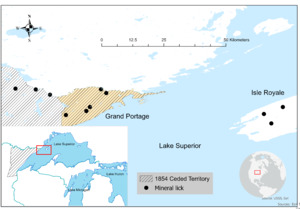
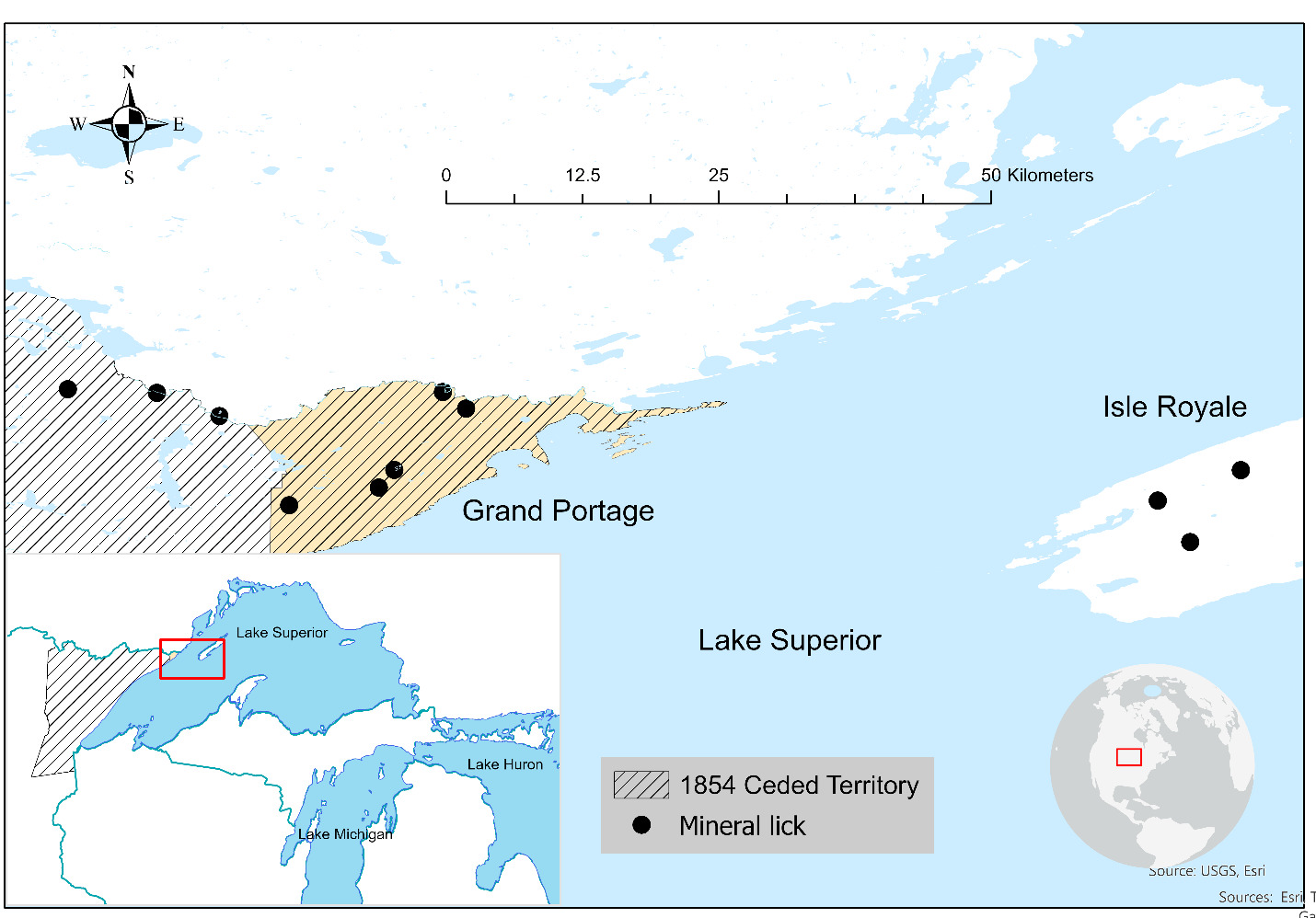
To explore how these species interactions play out in real-world systems, we quantified seasonal and diel use of mineral licks by ungulate and predator species using camera trap images from Isle Royale National Park, Michigan, USA and from paired sites within Grand Portage Indian Reservation as well as the 1854 Ceded Territory, Minnesota, USA (Fig. 1). These sites were chosen to represent contrasting mammalian communities (i.e., American black bears [Ursus americanus; makwa] and white-tailed deer are absent from Isle Royale), thus providing a natural experiment to compare the annual and diel use of mineral licks with predation and competition pressures. We contrasted predator–prey and competitive interactions across island and mainland systems, examining the overlap of species, sex, and temporal activity patterns. Island ecosystems pose resource constraints (Belovsky & Jordan, 1981; Brown et al., 2020) and facilitate species interactions specific to that location (Pichler et al., 2022), which we sought to observe through the comparison of temporal lick use between these 2 ecosystems. Our objectives were to identify when mineral lick hotspots pose the greatest risk of disease transmission from deer to moose, examine predation risks, and guide future monitoring, as well as develop disease risk mitigation strategies to support a sustainable moose population for Tribal harvest (on the mainland only). Additionally, we assessed seasonal, sex-specific lick use by moose and deer on the mainland to evaluate whether temporal use patterns reflected sex-specific mineral demands (e.g., lactation, antlerogenesis).
STUDY AREA
Our 2 study areas were 1) the Grand Portage Indian Reservation (Gichi Onigamiing), home to the Grand Portage Band of Lake Superior Chippewa, and adjoining 1854 Ceded Territory, Minnesota, USA (hereafter Grand Portage), and 2) Isle Royale National Park (Minong), Michigan, USA (hereafter Isle Royale; Fig. 1). The study areas were separated by ~33 km of Lake Superior (Gichigami) waters and were historically, and remain, important to the Anishinaabeg (Anishinaabe people).
These sites were similar in climate, topography, and forest types. Isle Royale was occupied by the Grand Portage Band prior to Euro-American colonization and is culturally valuable to the Tribe, as described in the 2019 Traditional Cultural Property designation by the National Park Service (NPS; National Park Service, 2019). Isle Royale’s reduced mammalian community, due in part to the absence of black bears and white-tailed deer, created a distinct predator–prey dynamic from the mainland.
Grand Portage Indian Reservation
The Grand Portage Indian Reservation is a 227 km2 federally recognized Indian Reservation within Cook County, MN, USA. The Reservation sits on the northern shore of Lake Superior and is delineated from Ontario, Canada by the Pigeon River to the north. The 1854 Ceded Territory adjoins at the western boundary, and encompasses 5.5 million acres of federal, state, and private lands. Boreal forests are dominant with abundant balsam fir (Abies balsamea; zhingob), white spruce (Picea glauca; gaawaandag), white birch (Betula papyrifera; wiigwaas), and trembling aspen (Populus tremuloides; azaadi).
Black bears and deer are hunted seasonally across their range in Minnesota. However, since 2013, moose have only been legally taken by band members of Minnesota Chippewa Tribes exercising their treaty rights (Thompson, 2020). Moose were most common inland from Lake Superior with density estimates of ~0.26 moose/km2 (Oliveira-Santos et al., 2021). During the mid-2000s, moose abundance declined in part due to meningeal worm infection, which occurs when moose ingest gastropods carrying meningeal worm larvae originally shed in deer feces (DelGiudice, 2020; Lenarz et al., 2010; Severud et al., 2022; Wünschmann et al., 2015). White-tailed deer were estimated at a density of 1.2 deer/km2 (Michel & Giudice, 2020) and exhibited seasonal range shifts (Oliveira-Santos et al., 2021; Wehr et al., 2024b). Black bears (0.23/km2) and gray wolves (Canis lupus; ma’iinganag; 0.03-0.074 wolves/km2) were the only large predators in the region and were the main consumers of ungulate neonates (Carstensen et al., 2009; Moore, Severud, et al., 2024; Moore, Wolf, et al., 2024; Severud et al., 2019; Wolf et al., 2021). Excluding humans, wolves were the primary consumers of adult deer and also opportunistically preyed upon adult moose (Barber-Meyer & Mech, 2016; Chenaux-Ibrahim et al., 2024; DelGiudice et al., 2002). Historically, the Grand Portage Reservation wolf density estimates have been higher than other Minnesota regions (Moore, Wolf, et al., 2024).
Isle Royale
Isle Royale is a 544 km2 archipelago in Lake Superior and was established as a National Park in 1940. The park is currently managed by the NPS, and the Grand Portage Band co-stewards resources and assists the NPS in park management and administration through the Tribal Self Governance Act (1994). Known to local Anishinaabe tribes as Minong, the good place, Isle Royale is culturally significant and was used historically by Tribal ancestors, as it is today (Cochrane, 2012). The Grand Portage Band still exercises their right to fish and gather medicinal plants on the island. Boreal forests mirroring those of Grand Portage grow along the shoreline (R. O. Peterson, 1974). Northern hardwood stands composed of sugar maple (Acer saccharum; ininaatig) and yellow birch (Betula allegheniensis; wiinizik) dominate parts of the interior (R. O. Peterson, 1974). Nearly the entire island (99%) is federally designated wilderness (United States, 1976); hunting was prohibited at Park establishment (United States, 1942).
Moose arrived on Isle Royale in the early 1900s, likely swimming from the mainland, and became established as the only ungulate population after woodland caribou (Rangifer tarandus caribou; adik) disappeared from the island in the 1920s (Mech, 1966). Gray wolves arrived in the 1940s and became established as the largest predator on Isle Royale (R. O. Peterson, 1974). Following a population crash, 19 wolves were reintroduced to the island between 2018–2019, and numbered approximately 28 (0.05 wolves/km2) at the time of this study (Hoy et al., 2020; Romanski et al., 2020). Moose experienced a population increase following the near extirpation and subsequent reintroduction of wolves to an estimated 1,876 moose in 2020 (Hoy et al., 2020). Black bears and deer do not inhabit the island. Previous publications have detailed moose on Isle Royale using both human-made and natural salt licks (Murie, 1934; Risenhoover & Peterson, 1986), and have documented sodium constraints for these island-bound animals (Belovsky & Jordan, 1981; Botkin et al., 1973; Jordan et al., 1973).
METHODS
Camera trap deployment
To assess the activity patterns of large mammals in these 2 systems, we deployed camera traps during summer and fall of 2021 to December of 2022 at mineral licks in Grand Portage (n = 9), and during October 2021–December of 2022 on Isle Royale (n = 3; Fig. 1). These sites were located by observing Global Positioning System (GPS) collar movements of moose and deer making recursive movements to a concentrated area, and subsequently ground-truthed to assess use (Weesies, 2025; Minong-NPS unpublished data). Crews then placed camera traps to capture geophagia by deer and moose to confirm that the hotspots were mineral licks (Severud, Kautz, et al., 2023). We defined a mineral lick as a wet landscape feature where animals were observed licking, drinking, and eating from a specific location. Although these mineral licks were selected based on observed use by collared ungulates, they may not represent all lick types across the landscape. Our results pertain only to known licks within our study systems, though similar camera trap studies have been accomplished worldwide (Atwood & Weeks, 2003; Blake et al., 2011; Brochez et al., 2020).
We programmed cameras (Stealth Cam STC-G45NGMAX and STC-PX18CMO V2, Irving, TX, USA) to take 3 photos after a 30-second delay following a triggering event, capturing images continuously. Camera traps were set approximately 1.5 m above ground to maximize the detection of moose, deer, black bears, and gray wolves, and oriented toward the lick. Camera traps were visited at least once to replace batteries and SD cards.
Image classification
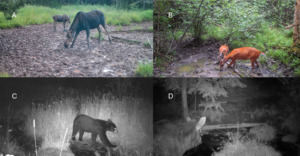
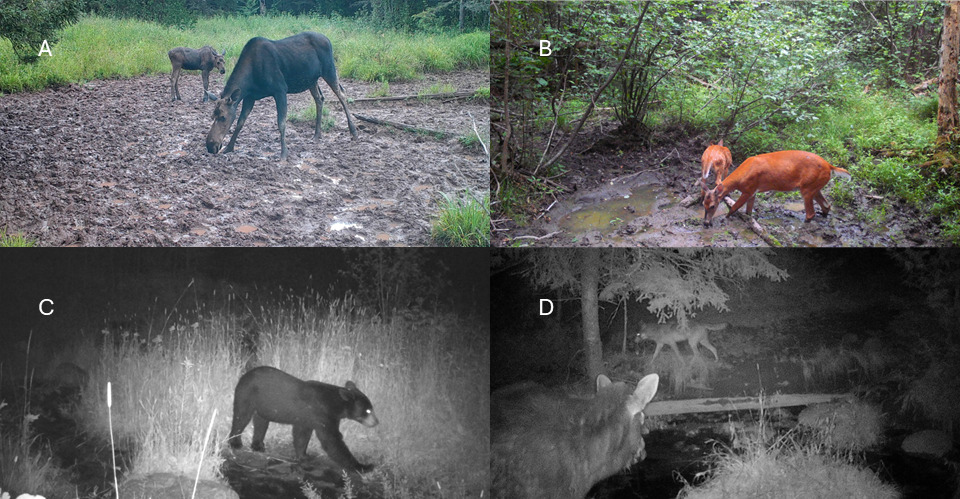
To enable bulk processing, all images were processed using MegaDetector v5.0, a machine-learning model that detects animals in images (Beery et al., 2019). Output from MegaDetector was then imported into Timelapse2 image analyzer (Greenberg Consulting, Inc. Alberta, Canada). We manually reviewed and further classified images for which MegaDetector assigned a ≥ 0.20 confidence score for animal detection (Greenberg et al., 2019). Images with a < 0.20 confidence level were excluded from further analysis. We manually labeled retained images with the species, number of adult or juvenile animals, and, if known, sex (i.e., presence or absence of antlers or pedicels for ungulates). Representative detections from camera traps deployed at monitored mineral licks are presented in Figure 2. Images were retained regardless of observed behavior because we were interested in species presence at mineral lick sites rather than specific activities (e.g., geophagia). Therefore, any detections at a lick site were considered mineral lick use. To ensure independent observations for analysis, we consolidated consecutive images of the same species, and, when identifiable, sex into 60-minute discrete detection events, so that all images of the same species and sex recorded at a given lick in the 60-minute bin were considered a single detection (Ridout & Linkie, 2009; Simo et al., 2023). Moose and deer were classified by sex; individuals of unknown sex were excluded from sex-specific overlap analyses.
Overlap activity analysis
We assessed activity patterns using the ‘overlap’ R-package (v0.3.9; Meredith et al., 2024) to quantify temporal overlap in activity patterns among species, sexes, and location (i.e., Grand Portage vs. Isle Royale), across diel (24-hr) and seasonal (calendar year) scales. For diel patterns, we converted the time of day for each detection event into radians to facilitate analysis of a 24-hour period and identify daily activity peaks and patterns. For seasonal activity patterns, the date of each detection event was converted into radians, mapping the calendar year onto a circular scale from 0 to 2π to identify seasonal activity peaks in mineral lick visitation (Ridout & Linkie, 2009). We evaluated the degree of overlap between activity distributions using coefficients of overlap following the overlap package guidelines (Ridout & Linkie, 2009). The value provides a descriptive measure of similarity between activity curves, with values ranging from 0 (no overlap) to 1 (complete overlap). We used “ 1” in cases where at least one sample size was <50, and used “ 4” when both sample sizes were ≥50. This test does not provide a P-value, but it quantifies the extent to which compared groups share temporal activity patterns. To estimate 95% confidence intervals, we employed a smoothed bootstrap resampling approach with 1,000 iterations, sampling with replacement from the original dataset using the ‘overlap’ R package (v0.3.9; Meredith et al., 2024). We then extracted Watson’s U2 statistic, which is used for circular data such as time of day. The null hypothesis was that the activity curves did not differ. Patterns were considered to be significantly different if the U2 statistic exceeded the critical value of 0.19 for α = 0.05. All analyses were conducted in Program R 4.4.2 (R Core Team, 2024).
RESULTS
Combined sampling effort across both study sites was 6,440 trap nights. Nine camera traps at Grand Portage accumulated 5,400 trap nights, whereas 3 camera traps on Isle Royale accumulated 1,040 trap nights. One camera trap on Isle Royale failed in 2021 after 31 days (1 October–1 November 2021), and one camera trap at Grand Portage was deployed for 34 days (16 June–20 July 2021). We recorded 1,656 independent moose detections (725 at Grand Portage and 931 on Isle Royale), 83 wolf detections (66 at Grand Portage and 17 on Isle Royale), 709 deer detections, and 108 bear detections (deer and bears occurred only at Grand Portage). Moose detection rates were 0.134 detections/trap night at Grand Portage and 0.895 detections/trap night on Isle Royale, approximately 6.7 times higher on Isle Royale. After censoring detections where the sex of a moose or deer was unknown, detections totaled 680 moose (320 bulls and 360 cows) and 684 deer (49 bucks and 635 does) in Grand Portage, and 1,088 moose (679 bulls and 409 cows) on Isle Royale.
Grand Portage and Isle Royale moose activity patterns
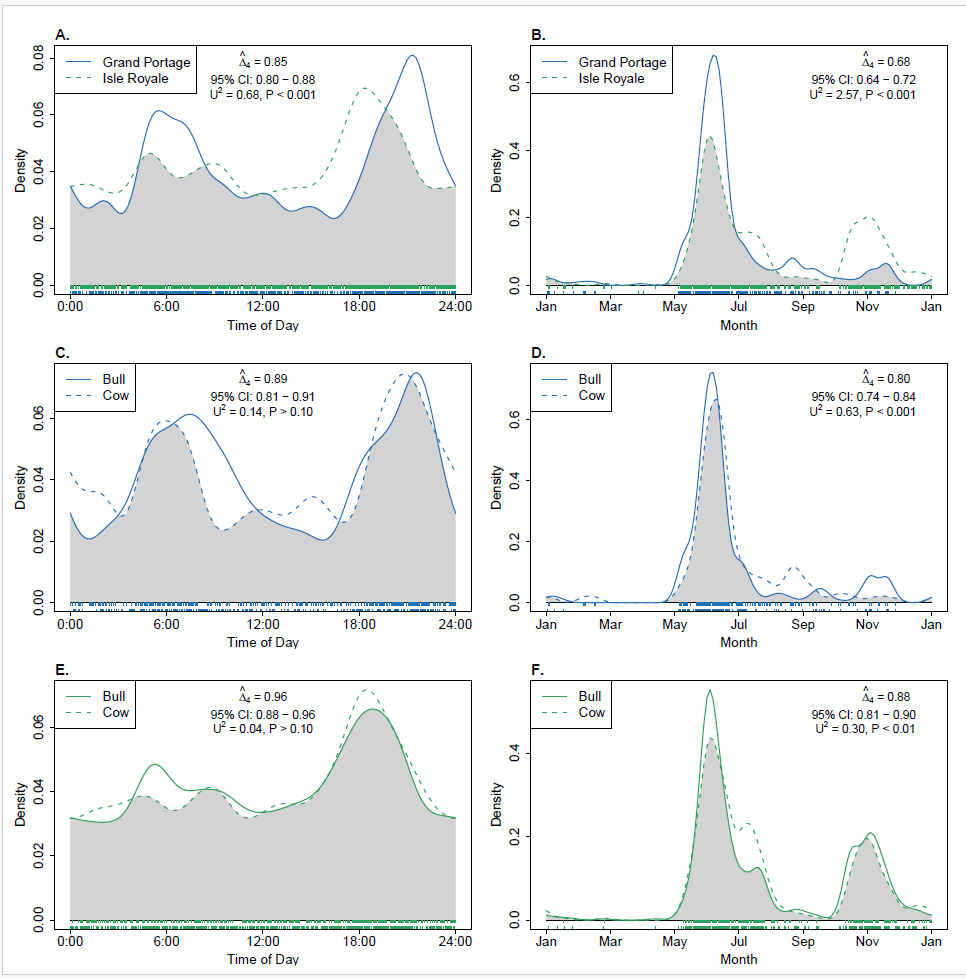
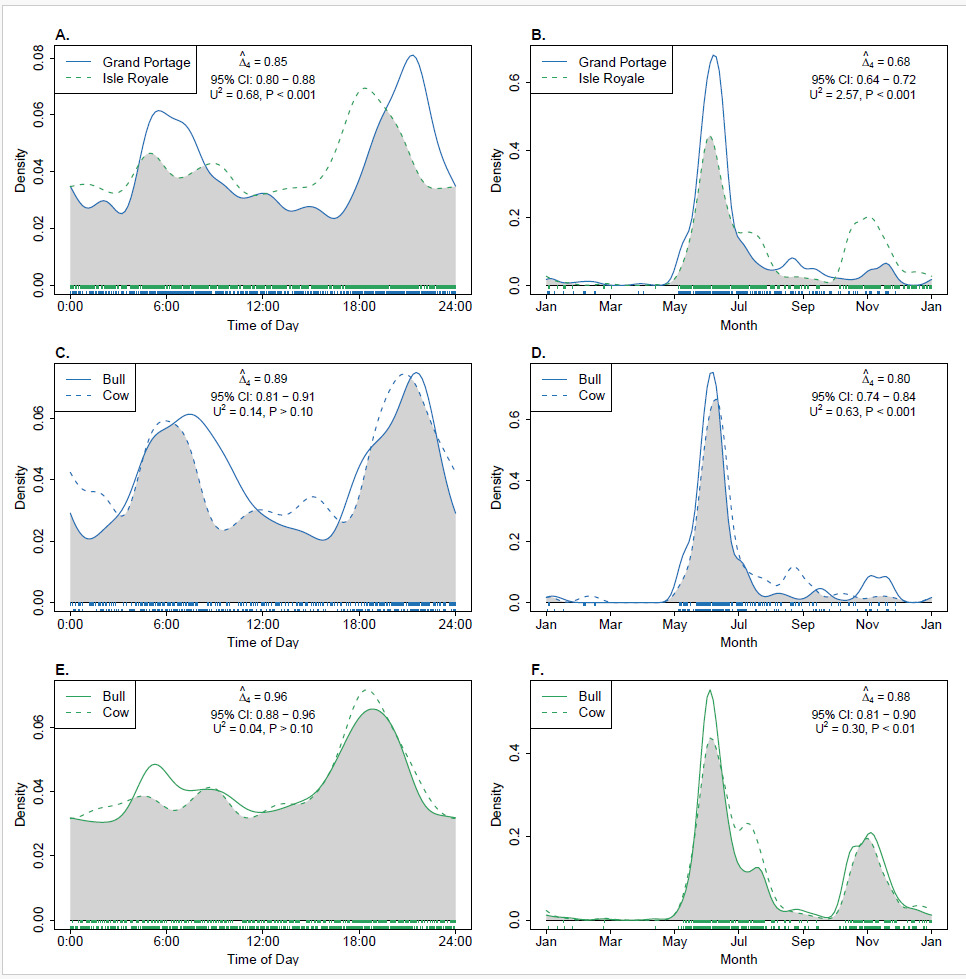
Moose activity distributions at mineral lick sites overlapped considerably between Isle Royale and Grand Portage at diel 4 = 0.85, 95% CI: 0.80–0.88; Fig. 3A) and annual 4 = 0.68, 95% CI: 0.64–0.72; Fig. 3B) timescales. Despite this overlap, Watson’s U2 indicated that activity distributions differed between the systems at both diel (U2 = 0.68, P < 0.001) and annual (U2 = 2.57, P < 0.001) scales. Moose in both systems frequented mineral licks from May through August, whereas Isle Royale moose exhibited an additional activity peak from October through December.
Additionally, we evaluated activity patterns between bulls and cows within each study system. Annual activity distributions of bulls and cows overlapped at both study areas (Grand Portage: 4 = 0.80, 95% CI: 0.74–0.84; Isle Royale: 4 = 0.88, 95% CI: 0.81–0.90). Despite this overlap, Watson’s U2 indicated that activity distributions differed between sexes at both Grand Portage (U2 = 0.63, P < 0.001; Fig. 3D) and Isle Royale (U2 = 0.30, P < 0.01; Fig. 3F). Activity at mineral lick sites by both sexes increased during late spring, peaked through summer, and declined during winter at both study areas. Isle Royale moose of both sexes exhibited an additional fall activity peak, but only bulls in Grand Portage had a small increase in late fall activity. Grand Portage bulls also had a comparatively smaller late-summer activity peak than cows (Fig. 3D).
Diel activity at mineral lick sites of bulls and cows within the same study systems showed similar patterns (Grand Portage: 4 = 0.89, 95% CI: 0.81–0.91, U2 = 0.14, P > 0.10; Fig. 3C; Isle Royale: 4 = 0.96, 95% CI: 0.88–0.96, U2 = 0.04, P > 0.10; Fig. 3E). Isle Royale bull and cow detections at mineral licks were mostly similar, with peak activity during late afternoon and evening hours. Grand Portage detections had similar detection peaks, with an additional morning activity period.
Moose vs deer activity patterns
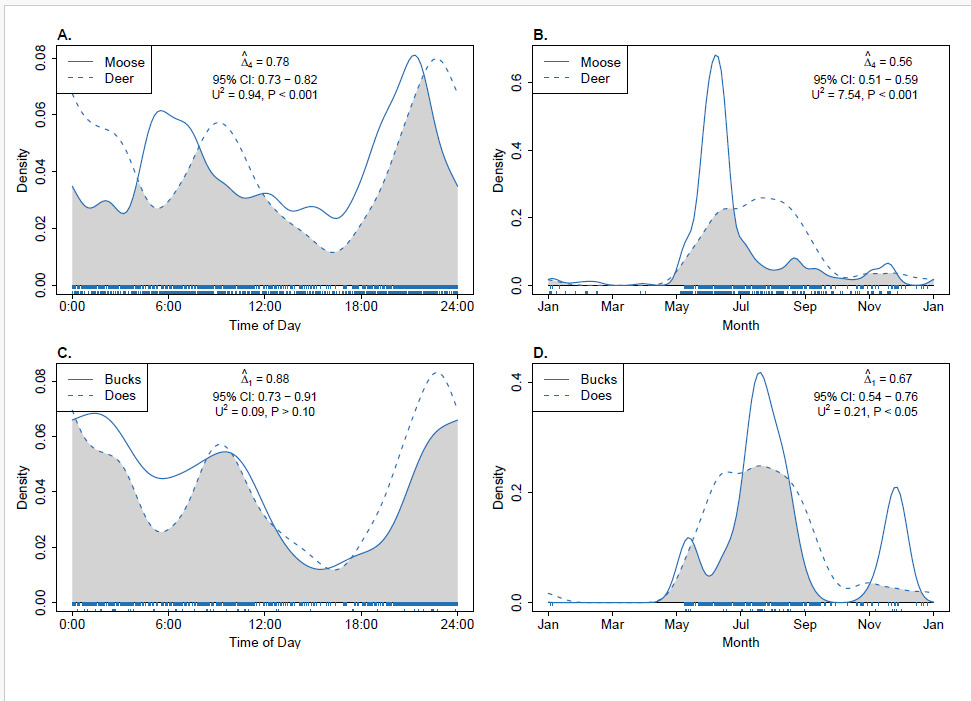
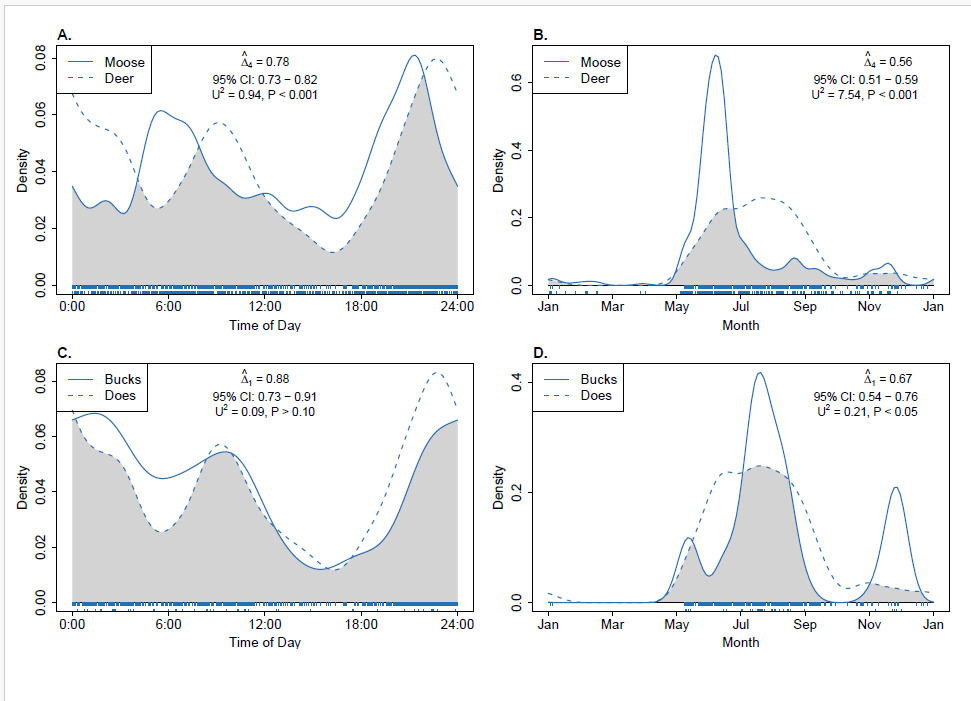
At Grand Portage, moose and deer activity patterns differed at both annual and diel timescales, with higher overlap at the diel scale 4 = 0.78, 95% CI: 0.73–0.82, U2 = 0.94, P < 0.001; Fig. 4A) than seasonally 4= 0.56, 95% CI: 0.51–0.59, U2=7.54, P < 0.001; Fig. 4B). Seasonal detections showed lower overlap between the species, with moose activity peaking during late spring and summer (May–July) while deer activity remained elevated from late spring through early fall (May–October), with a broader summer peak and few detections during winter. On a diel scale, moose and deer activity was nearly inverted between 0:00 and 12:00, with moose detections peaking around 6:00 and deer activity peaking around 9:00. In contrast, both species exhibited a similar activity peak during late evening and nighttime hours, with moose activity dropping off more abruptly than deer.
Buck vs doe activity patterns
Diel activity at Grand Portage mineral licks by bucks and does was similar 1= 0.88, 95% CI: 0.73–0.91, U2 = 0.09, P > 0.10; Fig. 4C). Both sexes were most active at night and in the early morning, with the lowest use in the afternoon. In contrast, seasonal lick activity differed between the sexes, with some overlap 1 = 0.67, 95% CI: 0.54–0.76, U2 = 0.21, P < 0.05; Fig. 4D). Activity by both sexes was minimal during winter before increasing again in late spring (Fig. 4D).
Moose vs predator lick use
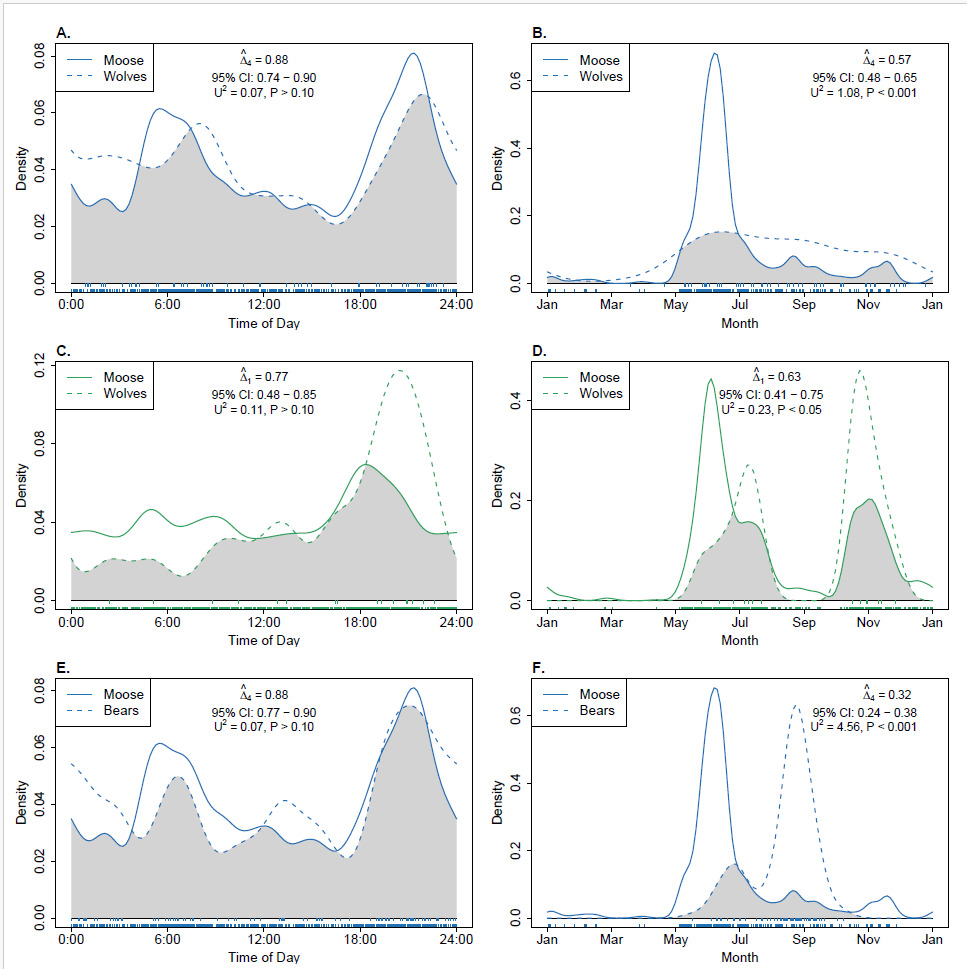
Moose and wolves at Grand Portage exhibited considerable diel overlap, indicating similar daily activity patterns at mineral licks 4 = 0.88, 95% CI: 0.74–0.90, U2 = 0.07, P > 0.10; Fig. 5A). However, seasonal activity differed, in that wolves maintained relatively consistent activity levels at mineral licks from March to January, whereas moose displayed a sharp peak in use between May and August resulting in relatively little annual activity overlap 4 = 0.57, 95% CI: 0.48–0.65, U2 = 1.08, P < 0.001; Fig. 5B).
On Isle Royale, moose and wolves exhibited diel activity overlap 1 = 0.77, 95% CI: 0.48–0.85, U2 = 0.11, P > 0.10; Fig. 5C) but seasonal activity distributions differed, with somewhat less overlap 1= 0.63, 95% CI: 0.41–0.75, U2 = 0.23, P < 0.05; Fig. 5D). Wolves showed a steady diel increase in detections at licks with a peak at 20:00, whereas moose overall activity patterns were more evenly distributed throughout the day with a slight peak around 18:00 (Fig. 5C). Seasonal moose lick use peaked prominently in June, with a smaller secondary peak in October-November, whereas wolf detections showed smaller peaks in July and more prominent in November (Fig. 5D). However, the small number of wolf detections on Isle Royale (n = 17) warrants caution when interpreting these patterns.
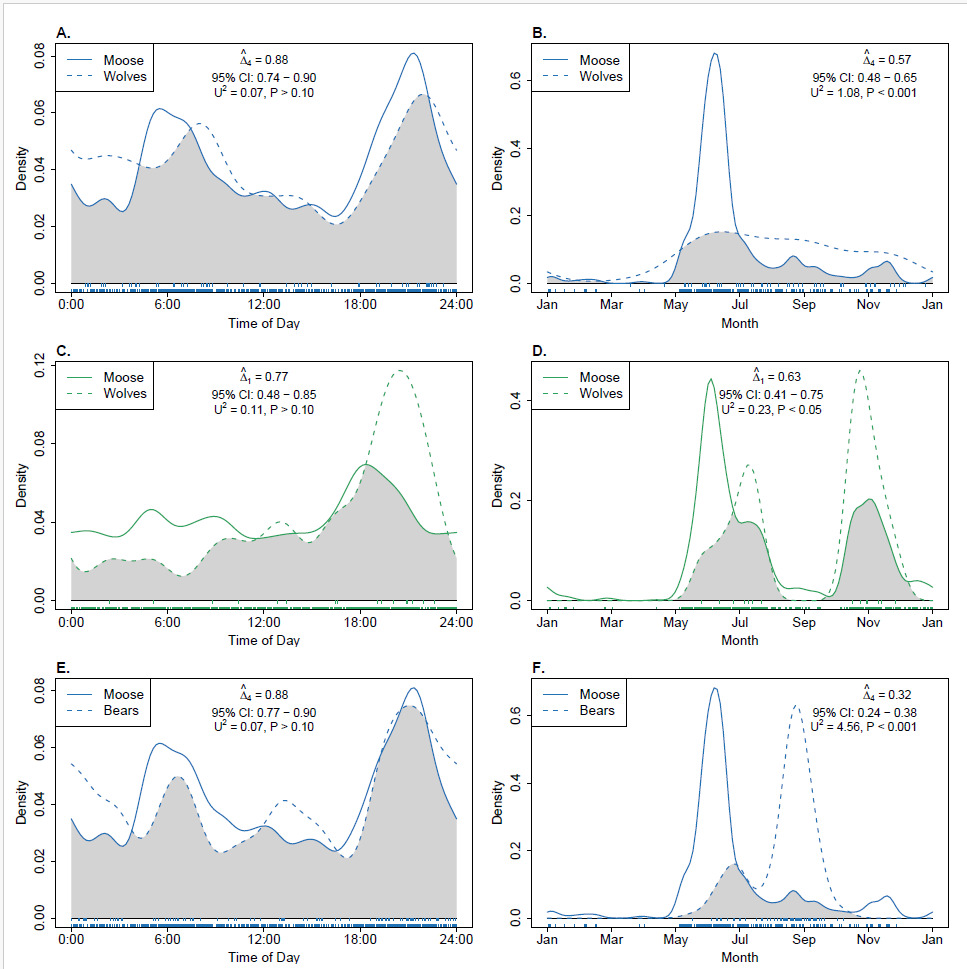
The diel activity patterns of moose and bears in Grand Portage had substantial overlap 4 = 0.88, 95% CI: 0.77–0.90, U2 = 0.07, P > 0.10; Fig. 5E), exhibiting similar crepuscular and nocturnal activity patterns. Seasonal activity overlap, however, was much lower 4 = 0.32, 95% CI: 0.24–0.38, U2 = 4.56, P < 0.001; Fig. 5F) with contrasting peaks in activity. Whereas moose exhibited the highest lick activity in June, bear activity peaked in September (Fig. 5F).
DISCUSSION
Seasonal patterns of mineral lick use corresponded with peak nutritional demands for both sexes of each cervid species. Strong temporal overlap between male and female moose at both study sites suggests little temporal partitioning between sexes. Nutritional demands from lactation typically peak 20–30 days postpartum (Robbins, 1993; Schwartz & Renecker, 2007), corresponding to the time we detected the most female lick use, and supporting a link between lick use and nutritional stress. Male lick use aligned with mineral requirements for post-winter recovery and early antler growth (Atwood & Weeks, 2003; Moen & Pastor, 1998), with a smaller secondary increase during the post-rut period. The late summer increase in lick use by bucks, but not bull moose, may have been an artifact of the small sample size of bucks (n = 49 bucks vs n = 320 Grand Portage bulls). Although males and females in our study exhibited broadly synchronous seasonal peaks, the observed sex-specific patterns are consistent with previous studies documenting differences in seasonal mineral lick use, including earlier male peaks reported by Fraser and Hristienko (1981).
Our observed seasonality of ungulate lick use is consistent with patterns of foraging behavior and mineral lick use in other ecosystems (Ayotte et al., 2008; Ditmer et al., 2018; Fraser & Hristienko, 1981; Rea et al., 2013). Seasonal differences in lick use suggest limited direct interactions between moose and deer at mainland licks; however, deer used licks throughout the spring and summer, possibly (and sometimes demonstrably; Severud, Kautz, et al., 2023) shedding meningeal larvae through defecation at these discrete sites. Moose and deer overlapped in both spatial and temporal use of mineral licks on and surrounding the Grand Portage Indian Reservation when mineral demands are high and meningeal worm shedding by deer peaks in spring (W. J. Peterson et al., 1996; Slomke et al., 1995). This overlap points towards a plausible mechanism for indirect parasite transmission and identifies mineral licks as ecological hotspots where culturally significant species may face elevated disease risks.
Work in northeastern Minnesota and on the Grand Portage Reservation has detected high levels of meningeal worm shedding prevalence in deer (66%; Escobar et al., 2019), and identified known gastropod hosts in moose feces (Garwood et al., 2023) despite extremely low terrestrial gastropod infection rates (0.1%; Severud, Petz Giguere, et al., 2023). The observed overlap between moose and deer, combined with confirmed deer defecation at licks (Severud, Kautz, et al., 2023), supports concerns from both community and scientific knowledge holders that licks may function as disease transmission nodes and warrant further investigation as focal points of meningeal worm transmission.
We observed distinct differences in moose diel patterns between mainland and island sites. On Isle Royale, where deer and bears were absent, this variation may reflect the simplified and less diverse predator community, where moose face only wolf predation and have less diel overlap with wolves (Fig. 5C), but greater seasonal overlap (Fig. 5D) than in Grand Portage. At the time of our study, the Isle Royale wolf population had only recently been bolstered through relocations, increasing the population from 2 in 2019 to 28 in 2022 (Hoy et al., 2022). Differences in moose activity patterns between Isle Royale and Grand Portage may therefore reflect differences in predator and prey communities between the two systems. Changes in communities via the loss or restoration of species can have profound effects on ecosystem functioning (Berger et al., 2008; Fortin et al., 2005).
Seasonal activity patterns of predators at mineral licks generally differed from those of moose, whereas diel activity showed greater overlap. This suggests different drivers for predator lick presence during the late summer and early fall, such as prey and berry availability (Gable et al., 2018; Oliveira-Santos et al., 2021), and absence during winter torpor for denning bears. The presence of bait sites for bears on the landscape also influences bear space use (Kirby et al., 2017), and one mineral lick that accounted for many bear detections was in close proximity to a bait station.
Wolves maintained relatively consistent activity levels at mineral licks on the mainland, in contrast to Isle Royale wolves, whose activity more closely mirrored moose detections. This pattern may reflect differences in predator–prey communities between the two systems, although the small number of wolf detections on Isle Royale warrants caution in interpreting these patterns. The near absence of deer and wolves at Grand Portage lick sites in winter corresponds with known migratory deer movements toward Lake Superior’s shoreline and resident deer yarding behavior, in which deer concentrate in relatively small areas during the winter (Oliveira-Santos et al., 2021; Wehr et al., 2024b, 2024a). This pattern aligns with earlier research showing minimal deer-moose overlap during winter months in northeastern Minnesota (Oliveira-Santos et al., 2021), and may reflect species-specific responses to forage availability, snow depth, predation risk, and proximity to human activity. The absence of deer on Isle Royale may contribute to differences in wolf–moose activity overlap between the two study systems.
Our findings are based on 12 known, frequently used mineral licks and may not represent all lick types across the broader landscape. Activity patterns may differ at less-used licks or licks with different environmental characteristics. Accordingly, inference should be limited to frequently used mineral licks within these study systems. Sampling effort also differed substantially between study areas, with 9 camera traps and 5,400 trap nights at Grand Portage compared with 3 camera traps and 1,040 trap nights on Isle Royale. This imbalance, along with the substantially greater moose detection rate on Isle Royale, may influence the sensitivity of comparisons between study areas and warrants caution when interpreting differences in activity distributions. Importantly, our observations are limited to activity at mineral licks and do not demonstrate how predators are using licks relative to the surrounding landscape. Predator detections were also substantially fewer than cervid detections; therefore, these patterns should be interpreted cautiously and warrant confirmation with additional sampling. Nevertheless, the limited predator activity observed at mineral licks suggests these sites may not function as predator hotspots to the same extent reported in other ecosystems (Griffiths et al., 2025).
Mineral licks are often focal points on the landscape, and their presence can facilitate ecological interactions among animals. Within Anishinaabe and other Indigenous worldviews, these sites are recognized as important places where animals fulfill nutritional needs and enact relationships with the land. For the Grand Portage Band of Lake Superior Chippewa and other Indigenous Nations that maintain cultural and subsistence relationships with moose, moose are not merely wildlife but relatives and teachers whose well-being is integral to cultural continuity and food sovereignty. The overlap of moose and white-tailed deer at mineral licks is of concern to Indigenous resource managers who co-steward ceded territories with non-tribal state and federal entities. Deer are a definitive host of meningeal worm and mineral licks may increase risk of disease transmission to moose during periods of heightened resource need.
Our findings build on previous research on mineral lick activity (Brochez et al., 2020; Griffiths et al., 2020, 2025) and provide additional insight into spatiotemporal overlap at these important resource sites. Although direct interactions require species to occur at the same place and time, indirect interactions are not similarly constrained (Creel & Christianson, 2008). From an Indigenous-led research and governance perspective, these findings contribute to our collective understanding of animal health and habitat use and can inform stewardship rooted in relational accountability, intergenerational knowledge, and responsibility. This study was developed through collaboration among the Grand Portage Band, Isle Royale National Park, and university researchers, providing information that can support co-stewardship of moose and their habitats.
In practical terms, the spatial identification of mineral lick sites with high risk for cervid overlap may offer opportunities for Indigenous and co-management agencies to implement targeted stewardship strategies. These may include: (1) deploying anthropogenic mineral blocks away from high-risk areas to redirect moose usage, while recognizing that supplemental resources can alter wildlife spatiotemporal activity and produce unintended community-level effects (Saldo et al., 2024), (2) reducing white-tailed deer densities through culturally appropriate harvests in known overlap zones, and (3) decommissioning specific lick sites through physical habitat alteration (Rea et al., 2021), particularly where alternative mineral resources are available. Importantly, such decisions must be made in partnership with Indigenous Nations, respecting their knowledge, sovereignty, and responsibilities to the land and moose. Further work is necessary to parse out where and how human intervention can make an impact in managing meningeal worm mortality in moose, as deer and moose range overlap has previously allowed for sustained moose population growth over longer timeframes in certain areas along its southern range (e.g., Maine, USA; Bogaczyk et al., 1993). In the specific case of Isle Royale, meningeal worm has not been documented, and any observed deer immigration may warrant aggressive removal to prevent meningeal worm establishment, subsequent infection of moose, and the resultant threat to ecosystem dynamics and cultural values.
Our study has highlighted the key periods of overlap within and between species inhabiting 2 ecosystems. Additional work over a longer timescale to determine whether these mineral lick sites serve as focal points for predator-prey interactions or simply reflect overlapping space use patterns would be valuable. Our study could also be improved by incorporating photo-period analysis rather than relying solely on the standard 24-hour cycle to better understand the impact light levels may have on observed activity patterns. Future research should focus on these locations as hotspots for meningeal worm transmission and sampling gastropods in the vicinity between the months of May-August at confirmed mineral lick sites.
More broadly, these findings align with the vision for Indigenous co-stewardship of moose populations articulated by Moore et al. (2024), which prioritizes recognition of Indigenous sovereignty, inclusion of Indigenous knowledge systems, and collaborative frameworks of care and responsibility across boundaries. Addressing the potential risks to moose posed by mineral licks is one component of a holistic approach to moose restoration and conservation that must also consider climate change (Carstensen et al., 2023; Lankester, 2018), landscape conditions (Ditmer et al., 2018), predator–prey dynamics (Chenaux-Ibrahim et al., 2024; Moore, Wolf, et al., 2024), and community needs (Moore, Severud, et al., 2024).
Mineral licks provide essential nutritional resources for moose but may also function as focal points for parasite spillover. Identifying and managing these sites through Indigenous co-stewardship can help balance the nutritional benefits of mineral licks with the potential risks associated with increased interspecific contact. Continued collaboration among Indigenous Nations, wildlife managers, and researchers will be critical for sustaining healthy moose populations in a changing environment.
Acknowledgements
This paper is a joint collaborative product of the Grand Portage Band of Lake Superior Chippewa Department of Biology and Environment, the Cheeseman and Severud labs at South Dakota State University’s (SDSU) Department of Natural Resource Management, and Isle Royale National Park. Funding for this project was provided by the United States Fish and Wildlife Service Tribal Wildlife Grant F19AP00035 Mooz (moose) habitat overlap with white tail deer: Understanding the spatial and temporal risks of parasite transmission in a multi-species boreal system. Additional funding came from the Great Lakes Restoration Initiative.
We thank the Gichi Onigamiing Tribal Council for their ongoing commitment to moose stewardship and research. State University of New York College of Environmental Science and Forestry provided administrative support for TK. WJS and AEC received full or partial salary support from the South Dakota Agricultural Experiment Station. Thank you to students of Wildlife Disease at SDSU for generating hypotheses and cataloging camera trap images.